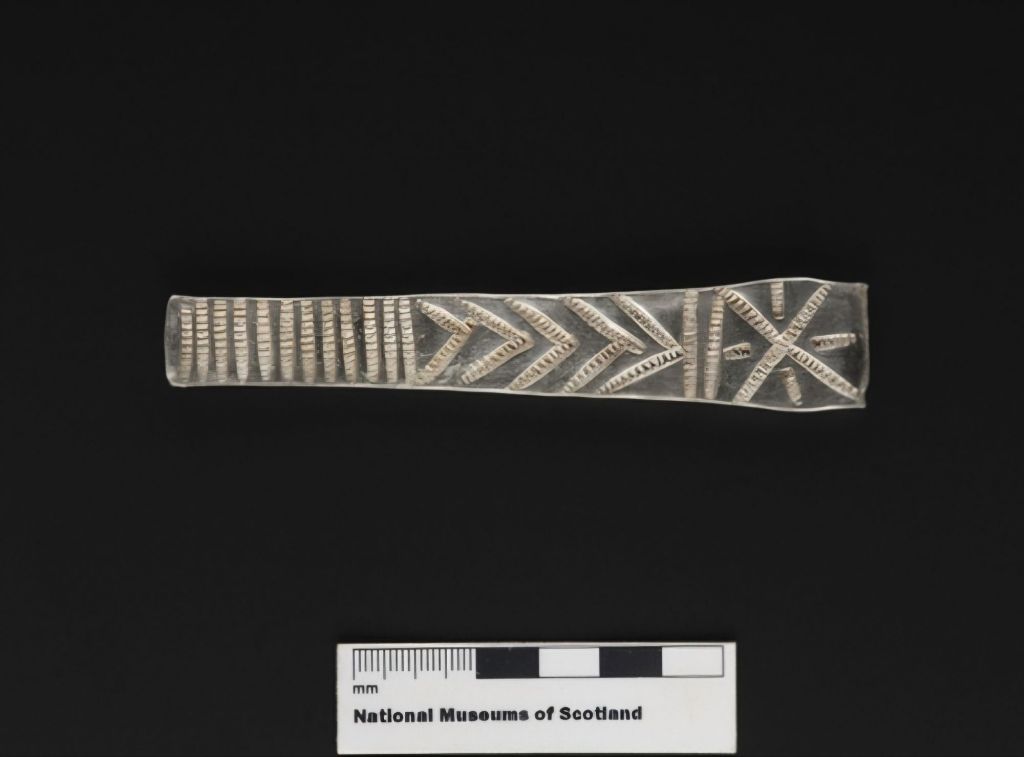
Generally speaking, the Galloway Hoard, deposited in south-west Scotland around AD 900, isn’t considered in the context of its hacksilver bullion content and parallels with the Cuerdale Hoard.
Galloway is not, after all, a ‘typical’ hacksilver hoard like that at Cuerdale (see below, dep. c. 905-910), with the latter’s diverse spectrum of highly fragmented silver, despite their (approximately) shared chronology and find spots in the lands surrounding the Irish Sea Region.
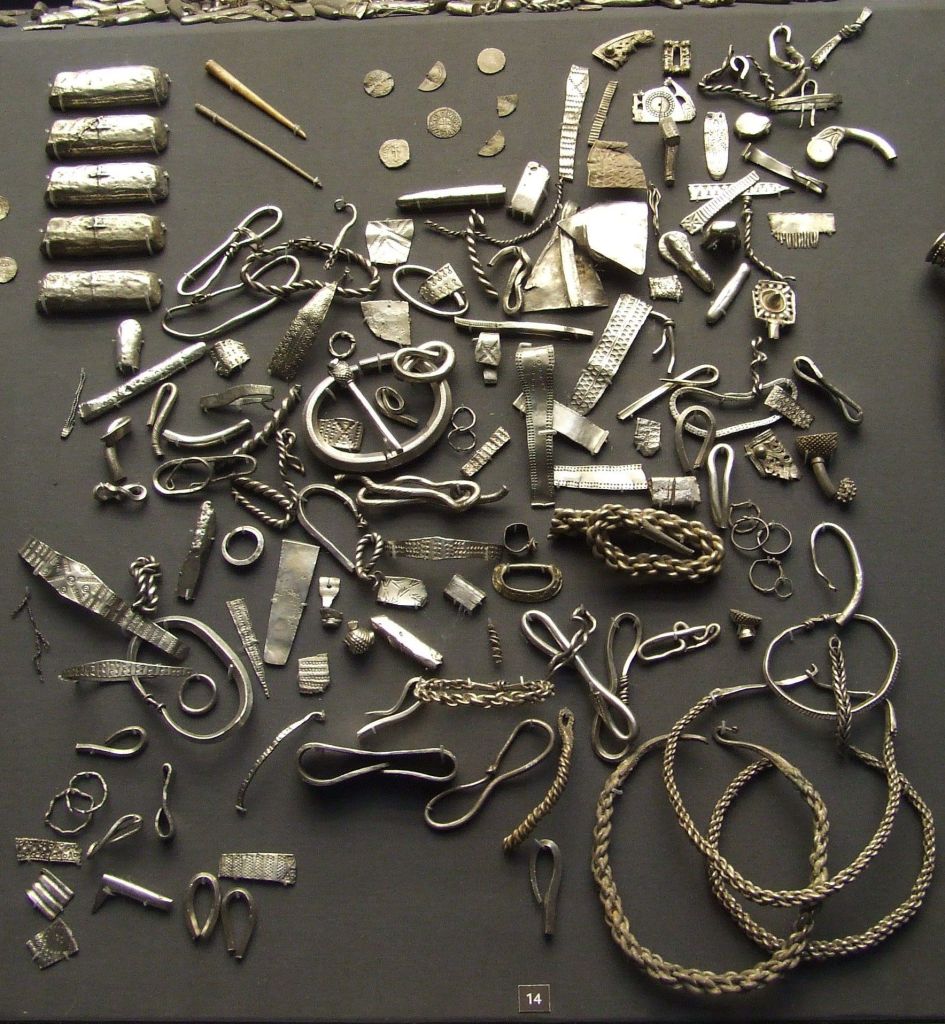
At closer inspection, however, and thanks to the photography catalogue of National Museums Scotland, connections between Galloway and Cuerdale in terms of their hacksilver profile can be drawn out, perhaps opening up a conversation about the development and chronology of bullion economies and hacksilver currency in and around the Irish Sea Region at the beginning of the 10th century.
Hacked Armrings
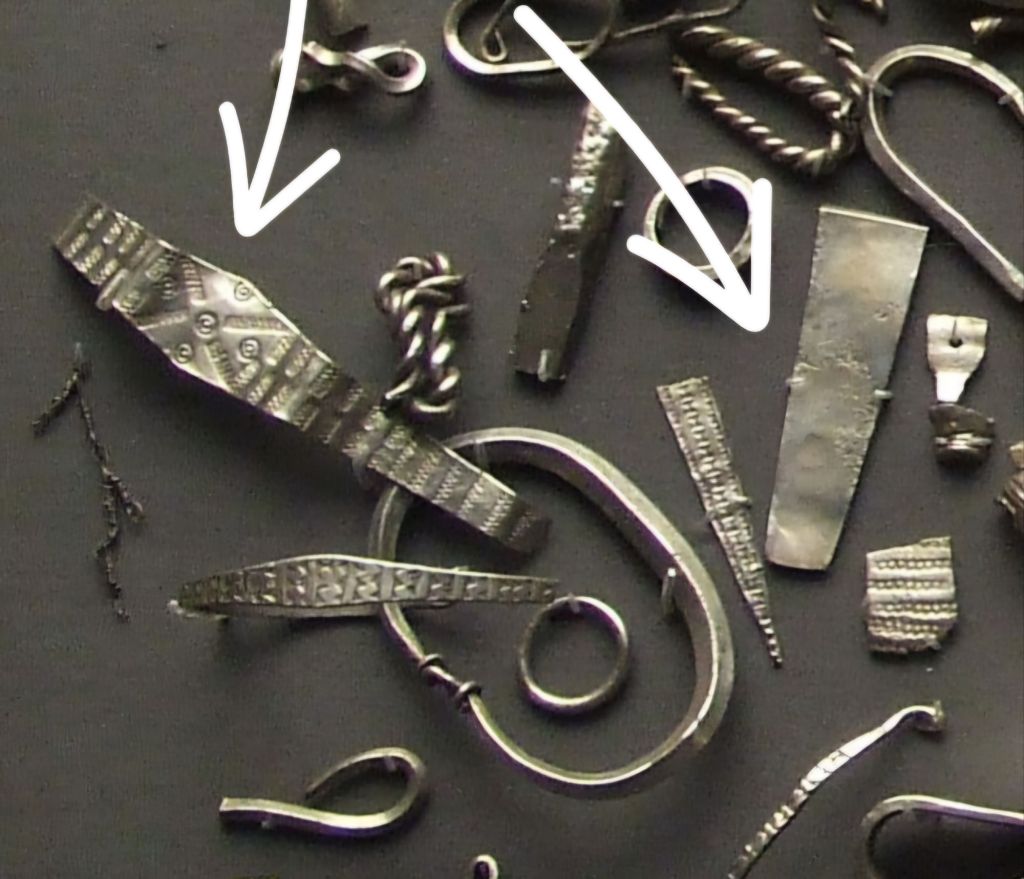
Let’s look again at the selection of Cuerdale artefacts, focusing on its treatment of armrings:
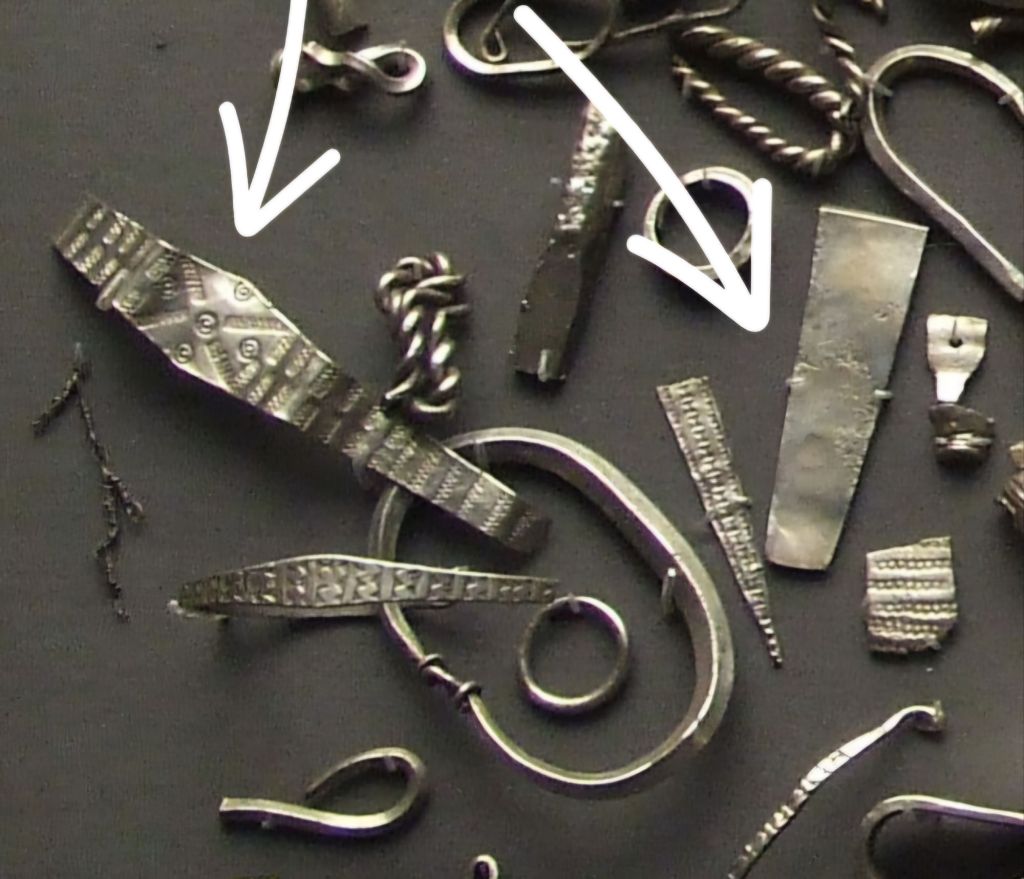
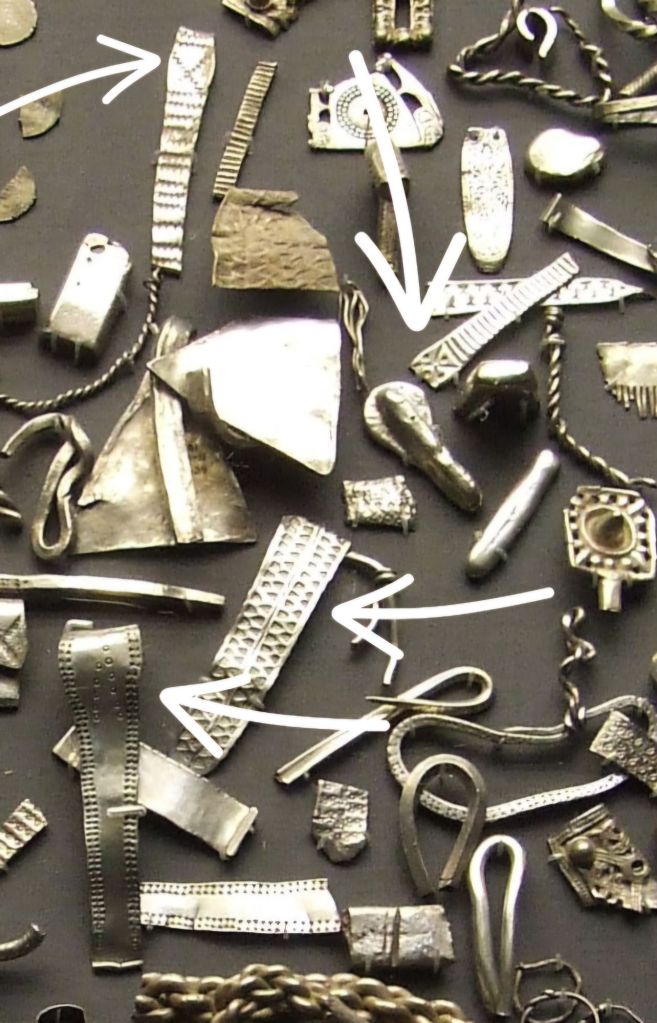
In the above, note the indicated armrings, and in particular, the treatment of the ‘broadband’ type that originated in Southern Scandinavia before seemingly being adopted and manufactured mainly in Hiberno-Scandinavian contexts in the period c. 890-930 (Sheehan).
The enlarged centre of the broadband type is generally recognised by a cross decoration on the wider central section and bands of parallel stamps on the arms, as seen in complete form below:
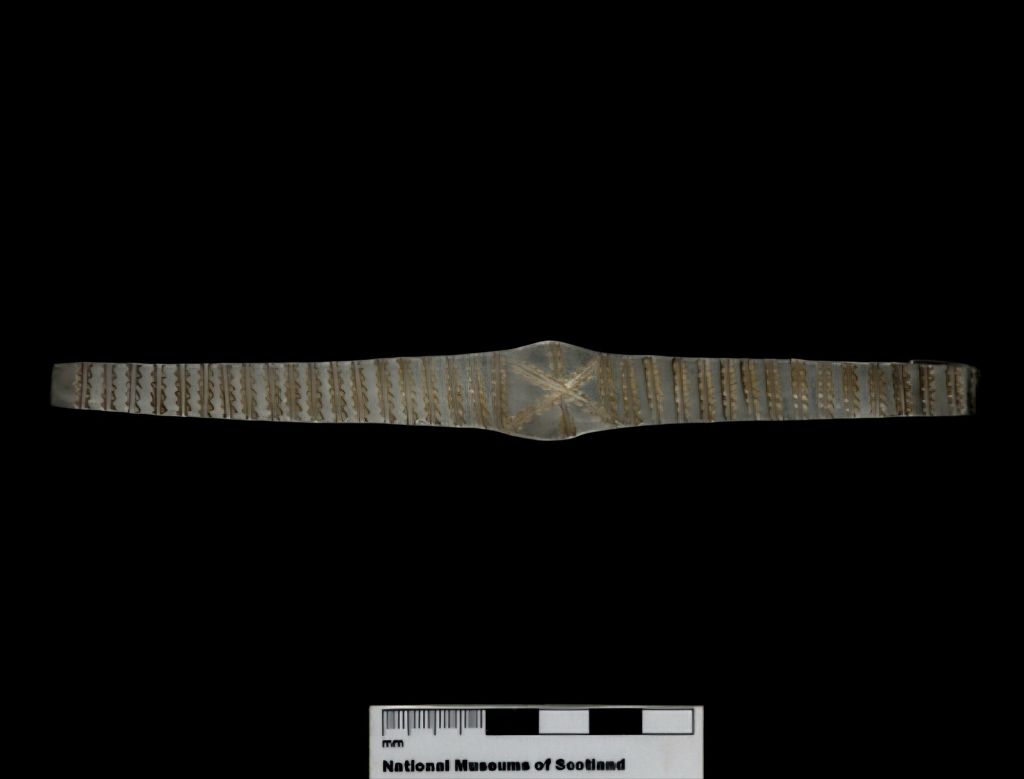
If we now look at the fragmentation on the hacked broadband (and other) armrings from the Galloway Hoard that can be seen in the NMS online catalogue, the parallels with Cuerdale are brought into relief, as well as providing us with a visual confirmation of Galloway’s small but appreciable hacksilver element.
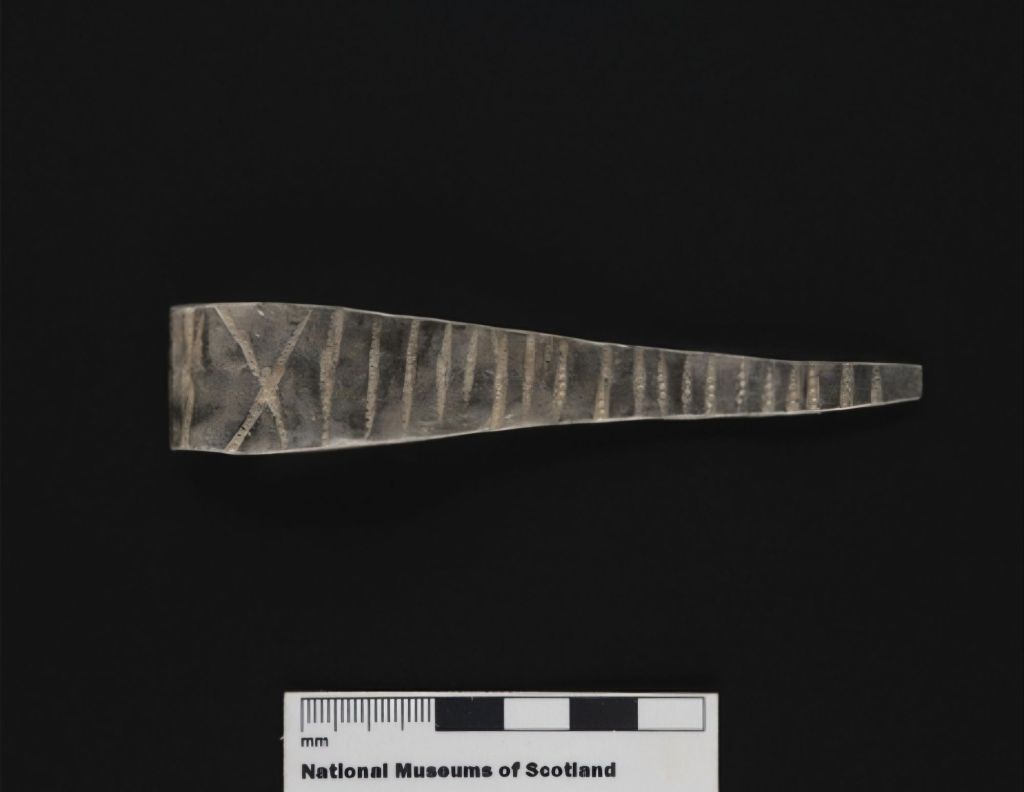

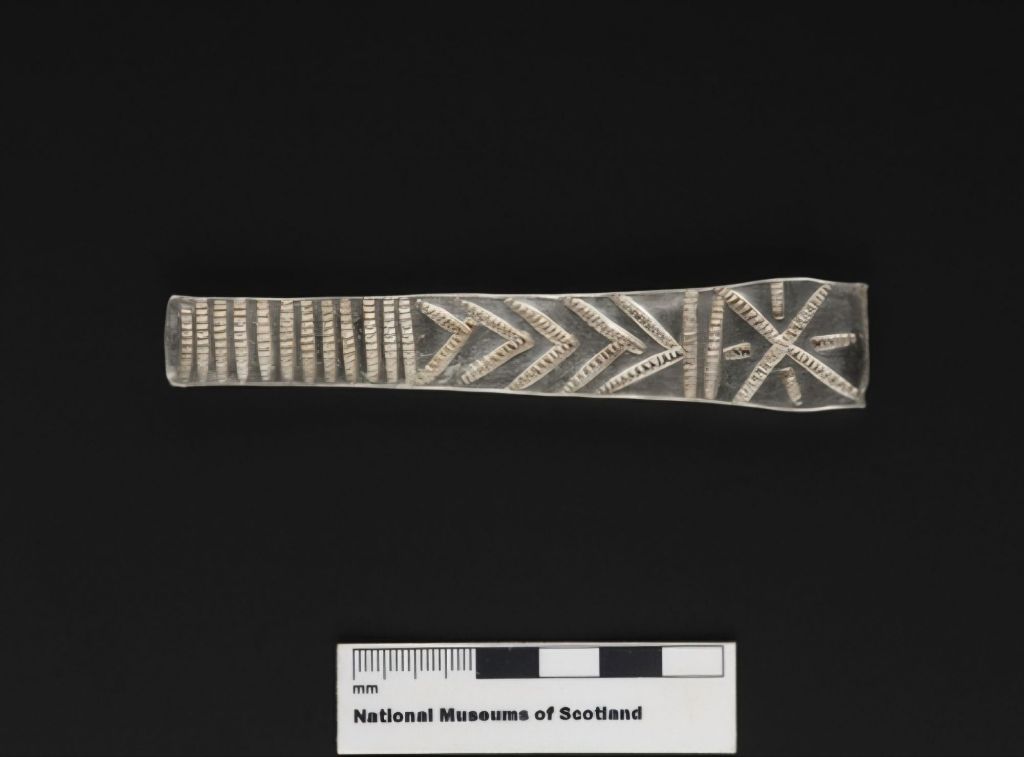
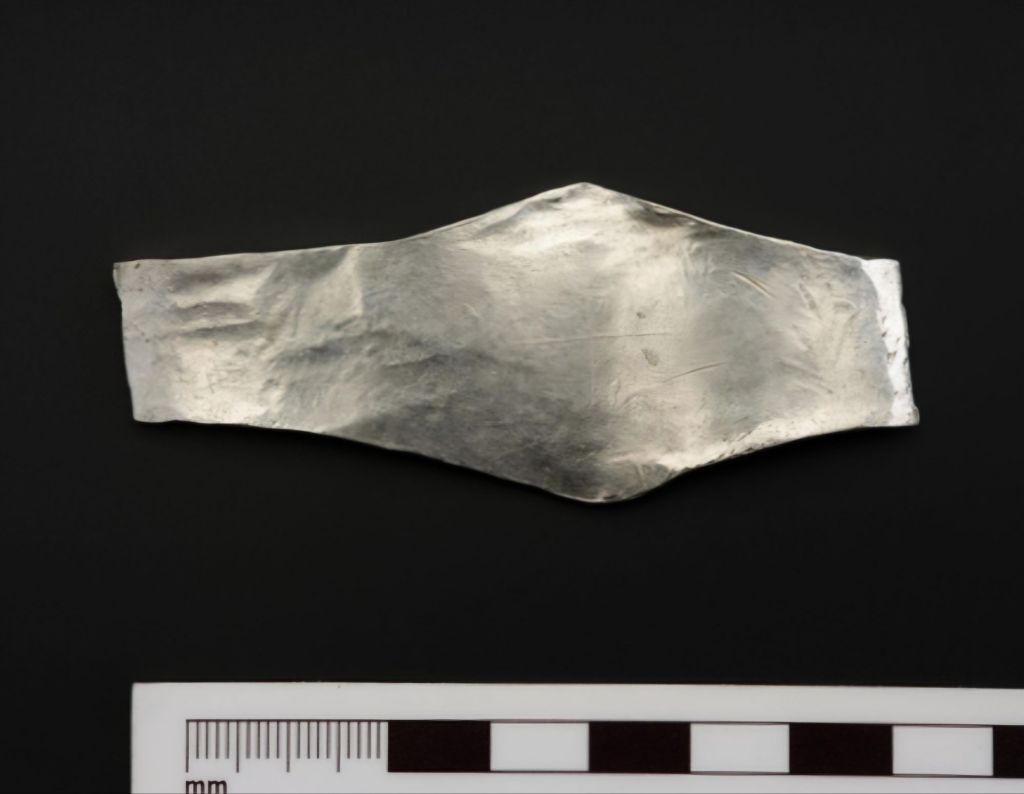


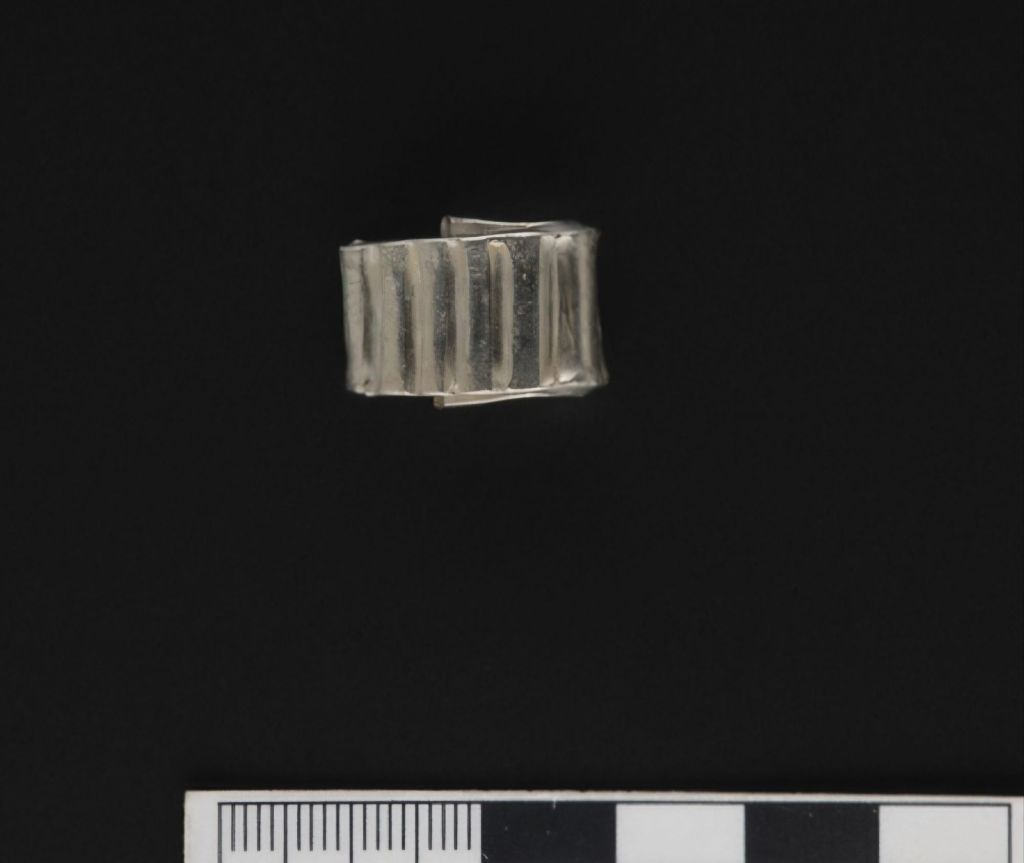
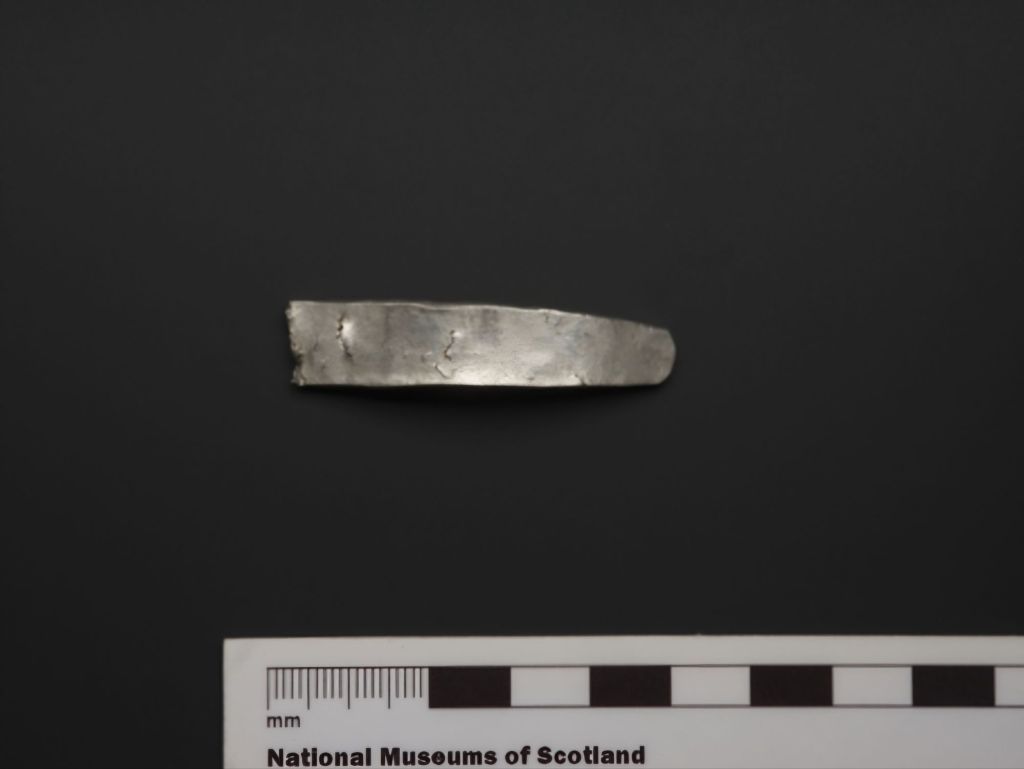


As seen below, the similarity of treatment of the broadband armrings in particular make this relief stark, suggesting a shared language of fragmentation (and, presumably, hacksilver use) between the local bullion currency pools and bullion creators represented at Balmaghie (Galloway) and Cuerdale.



Emerging Conclusions
Given the parallels outlined here, I suggest that the Galloway Hoard should be considered more of a hacksilver bullion hoard than it has been to this point, and closer, in some monetrary ways at least, to the Cuerdale Hoard than initial impressions might have it.
The general lack of highly fragmented silver compared to Cuerdale must not be overshadowed, however, and we should take heed of Adrián Maldonado’s suggestion that Galloway was deposited before hacksilver really took off as a form of cash money in Britain and Ireland.
To this, I would say that Galloway might demonstrate that the evolution of hacksilver in Galloway was ‘behind’ that as seen in the Great Army camp assemblages and associated hoards from the 870s on, and that this might reflect looser connections to the emerging Uí Ímair network kingdom that I outline in my monograph, A Viking Market Kingdom in Ireland and Britain.
That said, this is perhaps to ignore the impressive array of lead-inset weights and balance scales of the Kiloran Bay boat burial on Colonsay in the Inner Hebrides dated to the last quarter of the 9th century that points to a sophisticated involvement in hacksilver economic practice, despite being more ‘remote’ than the mainland Balmaghie find spot of the Galloway Hoard!
To end this speculative piece, perhaps the relative lack of fragmentation at Galloway speaks to the Old English speaking Northumbrians that appear to have inscribed their names on some of the broadband armrings they deposited; were they ‘New Vikings,’ getting used to the world of hacksilver, fragmented armrings and bullion economies introduced by the Great Army (with its medium- to long-distance connections to Ireland, Frankia, Frisia, the Baltic, eastern Europe and West/Central Asia) to which they might have been connected?
References and Further Reading
For broadband armrings, and particularly their Hiberno-Scandinavian biography, and Viking-Age silver in Ireland, read John Sheehan.
For the Galloway Hoard:
The Galloway Hoard: Viking-age Treasure (Martin Goldberg & Mary Davis)
Crucible of Nations: Scotland from Viking age to Medieval kingdom (Adrián Maldonado)
For Viking silver in Scotland:
The Viking-Age Gold and Silver of Scotland (James Graham-Campbell)
For Viking Scotland:
Scandinavian Scotland (Barbara Crawford)
Vikings in Scotland: An Archaeological Survey (James Graham-Campbell & Colleen Batey)
The Viking Age in Scotland: Studies in Scottish Scandinavian Archaeology (Tom Horne, Elizabeth Pierce, Rachel Barrowman)
For the Great Army:
Life in the Viking Great Army: Raiders, Traders, and Settlers (Dawn M. Hadley & Julian D. Richards, with Dave Haldenby, Gareth Perry and Mark Randerson).
CC-BY-SA 3.0 https://creativecommons.org/licenses/by-sa/3.0/legalcode.en
 Dr Tom Horne, Viking Archaeologist
Leave a comment