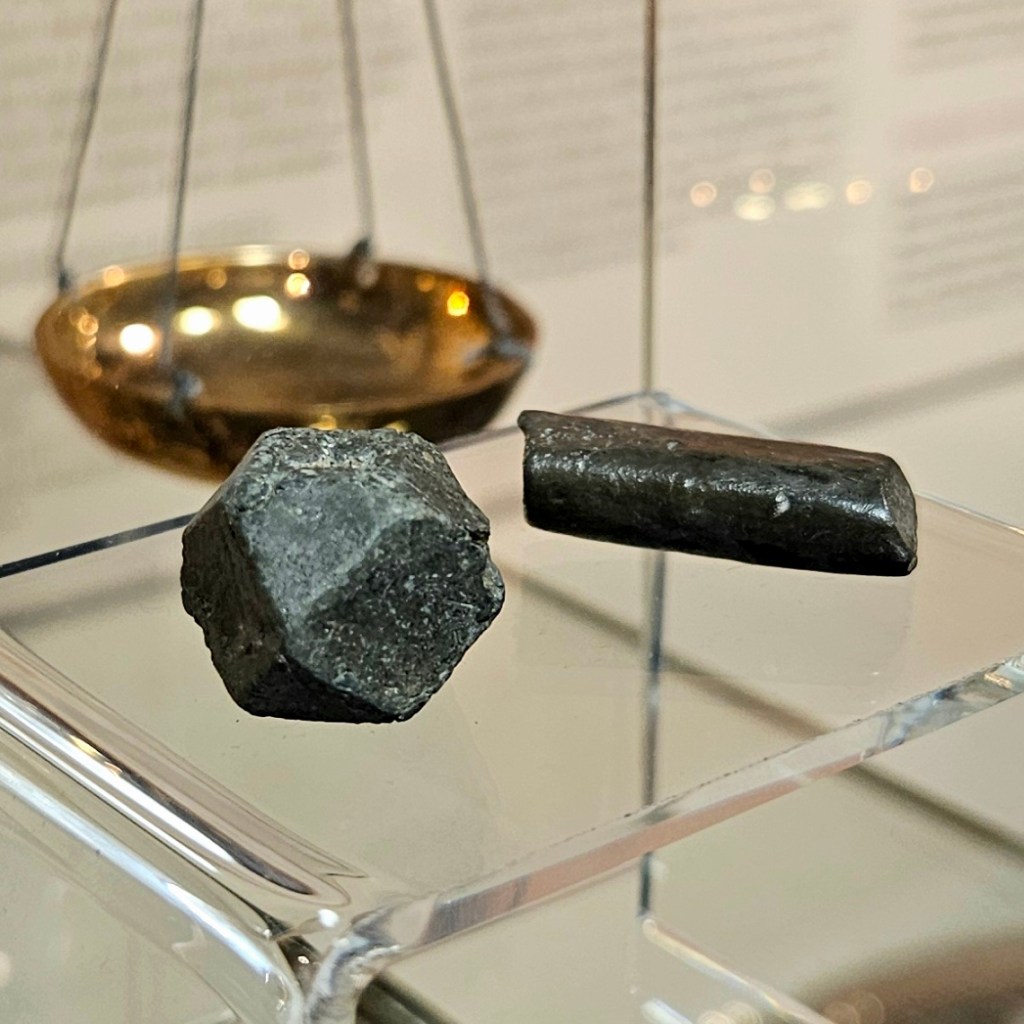
Evidence continues to grow for the presence of the Viking Great Army in what is now central Scotland! Read on to see how two finds on display in Dunblane Museum are exciting Viking experts…
Viking Bullion Weight
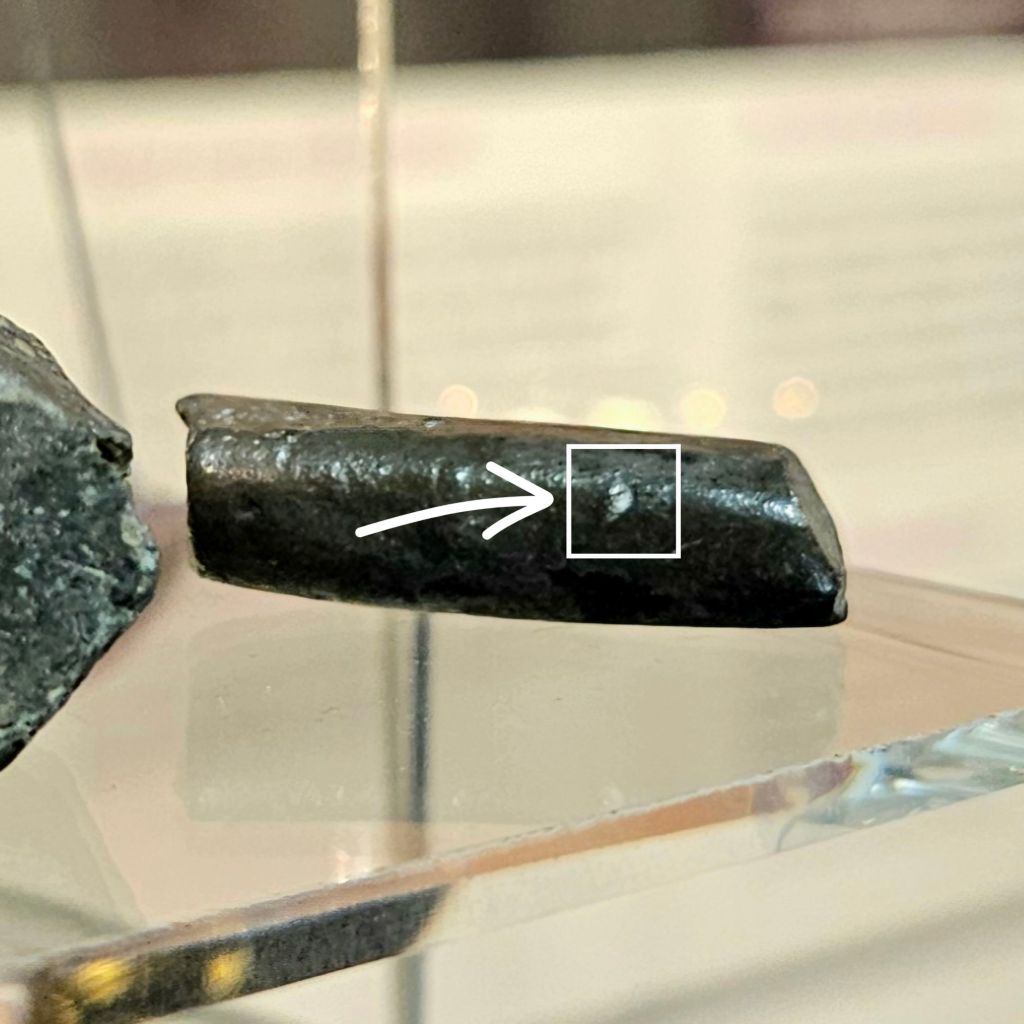
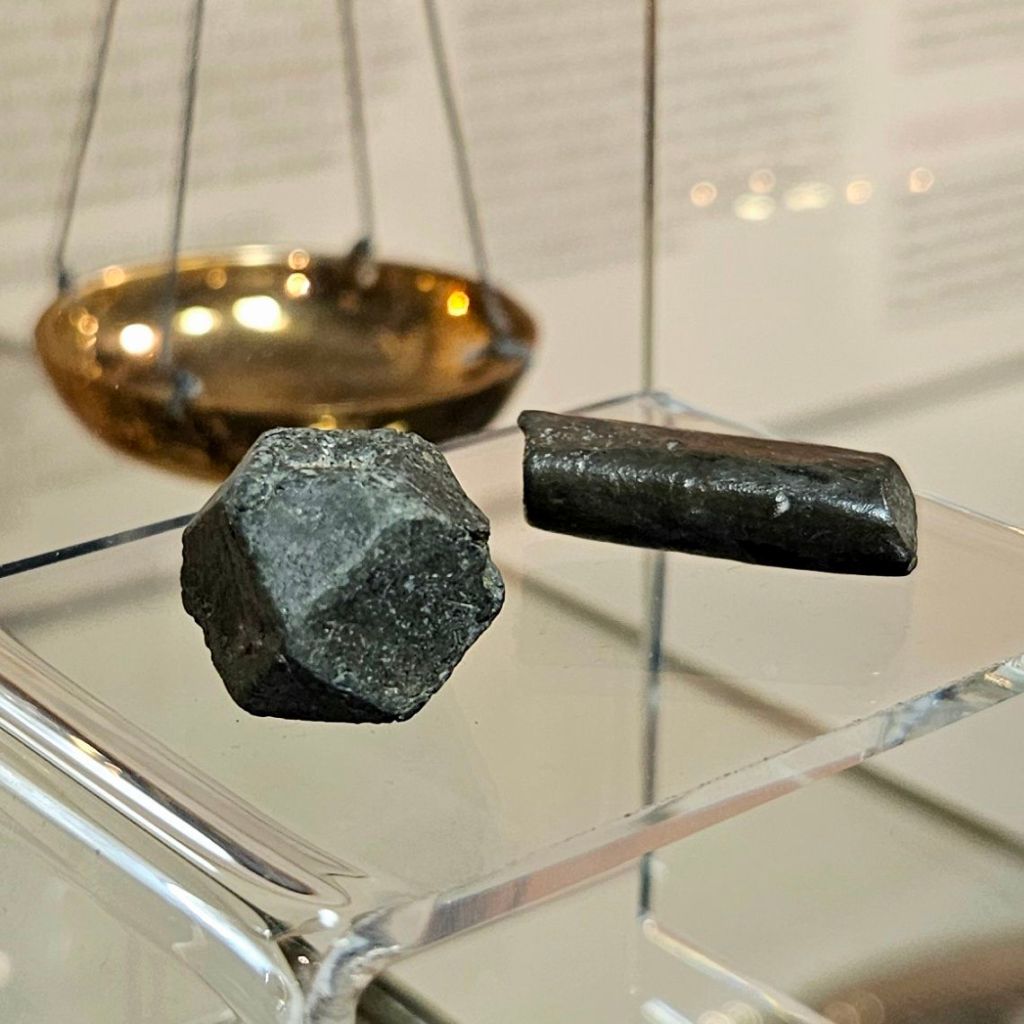
Seen on the left of the second photograph is a multifaceted Viking cubo-octahedral bullion weight that was reported to Treasure Trove and has now been acquired by Dunblane Museum.
Found in Cowie, Stirling, it appears to be of solid copper-alloy construction and weighs approximately one Viking ounce.
This type was introduced in the AD 860s and associated with the dirham coin influx, and the hacksilver bullion economy, in Scandinavia. Notably, it was popular with the Viking Great Army, being found at Aldwark and Torksey. Cubo-octahedrals are exceedingly rare in the region, and form part of a growing dataset that is suggestive of 870s Great Army, or Great Army inspired, activity in the lands that would become Scotland.
The weight is pictured with a piece of hacksilver, which includes some lovely purity test marks and of which more below, found in Dunblane.
Hacksilver Ingot
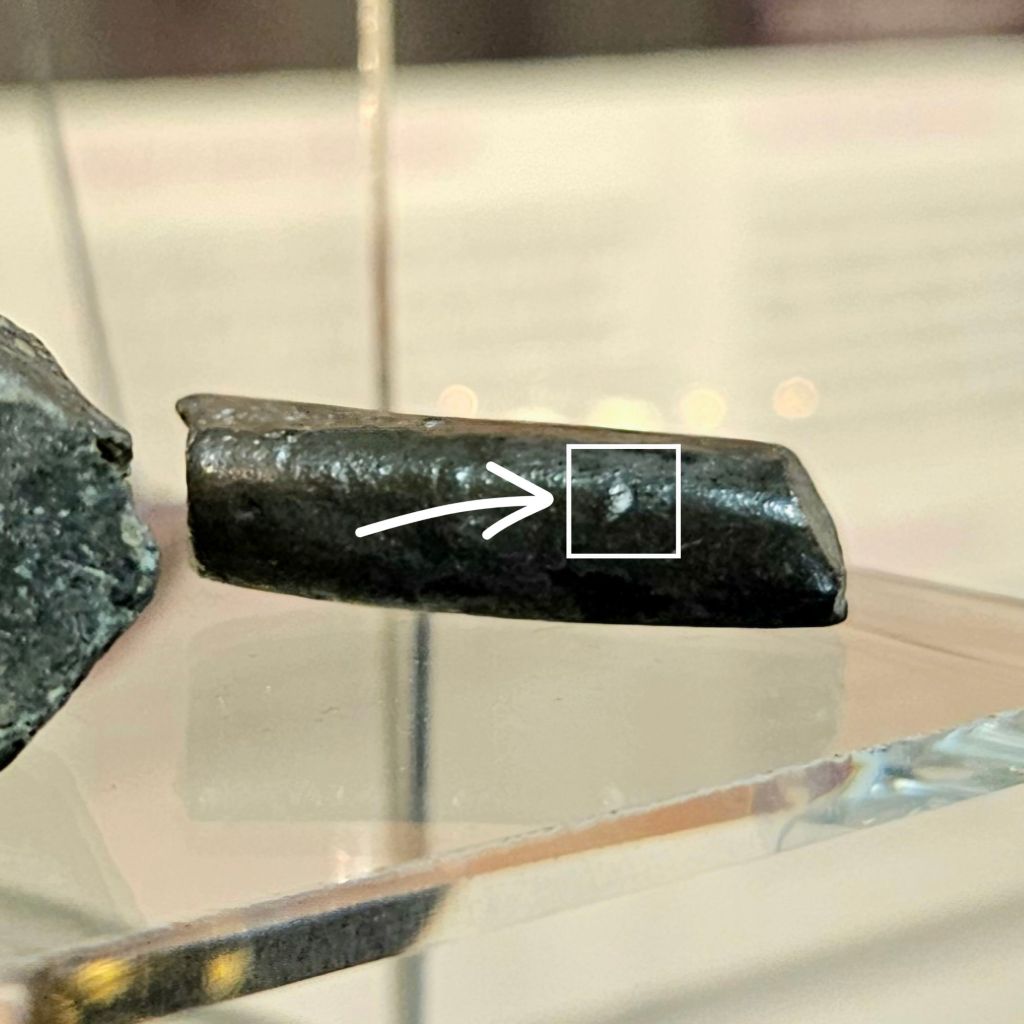
The above is a hacksilver bullion ingot fragment from Dunblane.
I’ve highlighted one of the test marks made to check for silver purity (the purer the silver, the softer it feels against a blade) and to guard against fraud (in case a thin wash of silver covered a base metal).
Purity of a precious metal was of the utmost importance in a bullion economy, where silver was valued as cash in relation to its weight and purity, being weighed in scales against weights, such as the pictured cubo-octahedral example.
At 18.9g, the ingot fragment is approximately ¾ of an average eyrir/ounce (c. 25.3g), which is really very interesting, as I would speculate that this was by no means a coincidence!
Fascinatingly, what we have with the cubo-octahedral weight and the tested ingot fragment is evidence for the Viking silver bullion economy in action in central Scotland, most likely in the 9th century, and with a good chance that they were introduced by elements of the Great Army.
Amazingly, then, the brilliant Dunblane Museum has artefacts from both sides of the balance scales used by Vikings to assess the value of bullion cash.
As the cubo-octahedral weight, it was reported to Treasure Trove by a responsible metal detectorist and subsequently acquired by Dunblane Museum.
Thanks
Thanks to Gill of Dunblane Museum and National Museums Scotland’s Adrian Maldonado for the opportunity to view them! Both finds were acquired after being reported to Treasure Trove in Scotland.
 Dr Tom Horne, Viking Archaeologist
Leave a comment