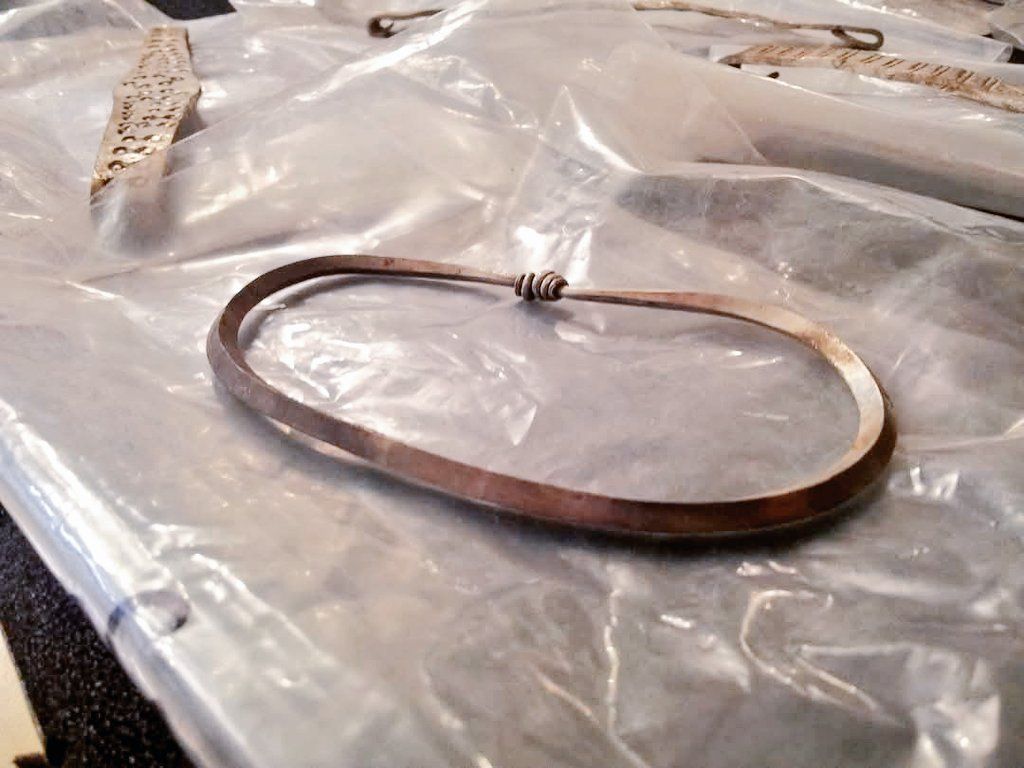
From Central Asia to the Galloway Hoard: This Scandinavian-type annular arm-ring (No. 50) from the Galloway Hoard was almost certainly made from dirham (coin) silver that had reached the Baltic.
The metallurgy research on this ring came from a National Museums Scotland Galloway Hoard talk with Jane Kershaw, Adrián Maldonado and Sally Magnusson about the work by Jane and her colleagues.
This discovery by Jane and her colleagues means that we have – at admittedly a couple of stages of remove – ‘dirhams’ (i.e., dirham-derived silver) in Galloway to join their cousins (two fragmented ‘Abbāsid dirhams) from the relatively nearby Talnotrie Hoard (dep. c. 875).
While we cannot know the paths of this arm-ring and those fragmented coins to Galloway, potential Great Army connections, and its connections to Southern Scandinavia and the Baltic, must be considered.
While this silver stock source for ‘No. 50’ is the unique outlier (to date) from the Galloway Hoard, it demonstrates that we may have more dirham silver hiding among the jewellery of Viking-Age Britain and Ireland, and makes me optimistic that any future research by this team and their pioneering methodology will uncover many more relevatory artefact biographies.
The ERC project, ‘Silver and the Origins of the Viking Age’ (PI Jane Kershaw; Stephen Merkel; Jani Oravisjärvi).
You can also read my Routledge book, A Viking Market Kingdom in Ireland and Britain, on the subject of Viking-Age silver economies and long-distance trade networks, which talks about how dirhams (and much else) moved through the Viking world.
 Dr Tom Horne, Viking Archaeologist
Leave a comment